


Stiff knees on the stairs. Hands that ache after an afternoon in the garden. A back that needs a few minutes to warm up before a round of golf or pickleball. For many active adults, joint discomfort is the one thing that quietly starts shrinking an otherwise full life.
I am often asked for an Ayurvedic perspective on arthritis, and the good news is that Ayurveda has a lot to say about it. It offers deep insight into simple diet, lifestyle, and environmental changes that can make a real difference to discomfort and range of motion, and can potentially slow or even stop the progression of the imbalance.
Even if you do not have arthritis, this guide will show you how to balance vata dosha, care for your joints, and prevent painful imbalances down the road, so you can keep doing the things you love for decades to come.
Key Takeaways
- Ayurveda sees most arthritis as an imbalance of vata dosha, whose dry, cold, rough qualities naturally increase as we age.
- To restore balance, bring in the opposite qualities of kapha: warm, moist, soft, nourishing, and stable.
- Favor warm, well cooked, lightly oily foods and limit cold, dry, raw foods, iced drinks, and nightshades.
- A regular daily routine with set meal times and bedtime is one of the most powerful tools for calming vata.
- Herbal oils such as castor oil, followed by dry heat, can offer fast local relief as part of a whole-body plan.
Why Joints Stiffen With Age: The Ayurvedic View
Arthritis can make even the simplest tasks a challenge as the joints degenerate and mobility lessens. In Ayurveda, arthritis is understood to be predominantly an imbalance of vata dosha, the mind-body principle that governs all movement in the body.
This is also why joint concerns become more common with age. Ayurveda describes three stages of life, each colored by one dosha. Childhood is the kapha stage, the middle years are the pitta stage, and the later decades are the vata stage of life, when vata's dry, light, and cold qualities naturally increase. That does not make stiffness inevitable. It simply means that the habits that keep vata calm matter more with every passing year.
If pitta and kapha are also out of balance, that changes the approach. For example, if you experience inflammation with your arthritis, as in rheumatoid arthritis, pitta is likely also involved. Heat is typically used to treat vata imbalances, but when pitta is imbalanced along with vata, heat can aggravate the imbalance even more if it is not applied properly.
Case by case differences in people's conditions, constitutions, and imbalances make it very important to seek the guidance of an Ayurvedic professional. If you are new to the doshas, start with our introduction to what Ayurveda is, or read my newsletter post Doshas Decoded.
The role of ama (toxins) in joint pain
Ama, which means undigested food and toxins, can also play a significant role in arthritis. In rheumatoid arthritis, it is said that ama accumulates in the joints along with vata dosha. As the body tries to remove this deep-seated ama from the joints, they can become inflamed and very painful. You can learn more about ama in 3 Effortless Yet Effective Ways to Detox.
This guide gives you a foundational overview of how Ayurveda begins restoring harmony to your physiology when it comes to arthritis. There are many types of arthritis, though, and an Ayurvedic professional can help you customize a plan for your specific imbalance.
What Aggravates Vata Dosha (and Why It Settles in Your Joints)
Many factors can cause vata to become aggravated and imbalanced. Here are some of the most common.
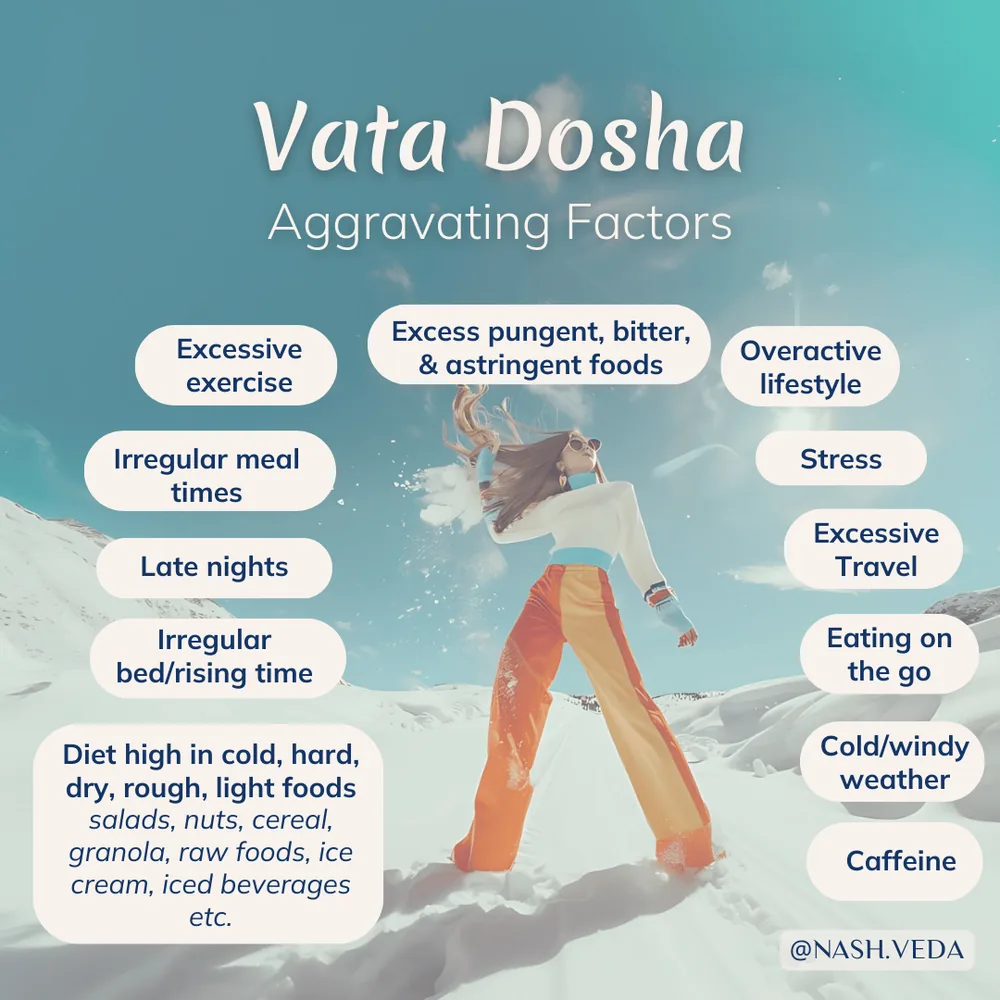
Vata's qualities are rough, cold, moving, light, subtle, clear, and brittle. Think of a windy, cold winter day.
Vata is responsible for all transportation, communication, and movement throughout the body.
When vata becomes imbalanced, its qualities increase throughout the body, causing various problems and disrupting the transportation, communication, and movement in your physiology.
Vata's qualities increase when you eat foods with vata qualities, spend time in environments with vata qualities, or keep a lifestyle and routine dominated by those qualities. In Ayurveda, like increases like. Adding coldness to something already cold makes it colder. In the same way, adding dry, rough foods to the body increases dryness and roughness in the body.
How vata settles in the joints
As vata's qualities steadily increase, one of the most common places for vata to localize is in the joints. Vata's dry, rough, hard, brittle, and cold nature causes the joints to become cold, rough, and brittle as the lubrication within them dries up. The result is joints that become painful, rigid, and sometimes deformed.

Osteoarthritis vs. Rheumatoid Arthritis in Ayurveda
The following recommendations are what Ayurveda generally suggests. For the most effective plan for your unique situation, an Ayurvedic professional will consider your type of arthritis, the diet and lifestyle factors behind it, and your mind-body type (prakriti).
The approach to osteoarthritis (OA) and rheumatoid arthritis (RA) differs, though they share some similarities.
Osteoarthritis (OA)
Mostly a vata imbalance.
A more nourishing approach is needed to strengthen and rejuvenate the joints.
Rheumatoid Arthritis (RA)
Involves vata, pitta, and ama.
A lightening approach comes first, to clear the ama accumulated in the joints, before more nourishing treatment can begin.
How to Balance Vata for Healthier, More Mobile Joints
Balancing vata in the joints is essential when there is degeneration. To restore harmony to vata, you need to increase kapha.
Kapha is almost the complete opposite of vata. Its qualities are heavy, soft, unctuous, sweet, stable, sticky, and cold. Think of a wet spring morning.
Kapha is responsible for lubrication, structure, and cohesion throughout the body.
Think of ways you can bring more of these kapha qualities into your diet, routine, and environment. (Because kapha is also cold, the warmth comes from your food, spices, oils, and surroundings.)
Addressing your diet and routine is always the first line of therapy in Ayurveda. No herbal remedy can compensate for consistently unhealthy dietary and lifestyle choices.
Turn this guide into a plan built for your body
In the Lifestyle Architect Program, Mary works with you one-on-one for 90 days to redesign your food, daily rhythm, self-care, and home around how you want to feel: more energy, deeper sleep, and less stiffness.
Explore the Lifestyle Architect ProgramFoods and Habits to Avoid for Stiff Joints
Look for the vata-aggravating foods and habits you can remove or reduce in your day-to-day life.
Do your best to avoid
- Dry, hard, cold, raw foods (chips, salads, ice cream, iced drinks, and yes, that includes ice water)
- Nightshades (tomato, potato, eggplant, bell peppers)
- Popcorn
- Crackers
- Legumes
- Long periods in cold weather and wind
- Staying up late
- An irregular routine
- Irregular meal times
- Stress
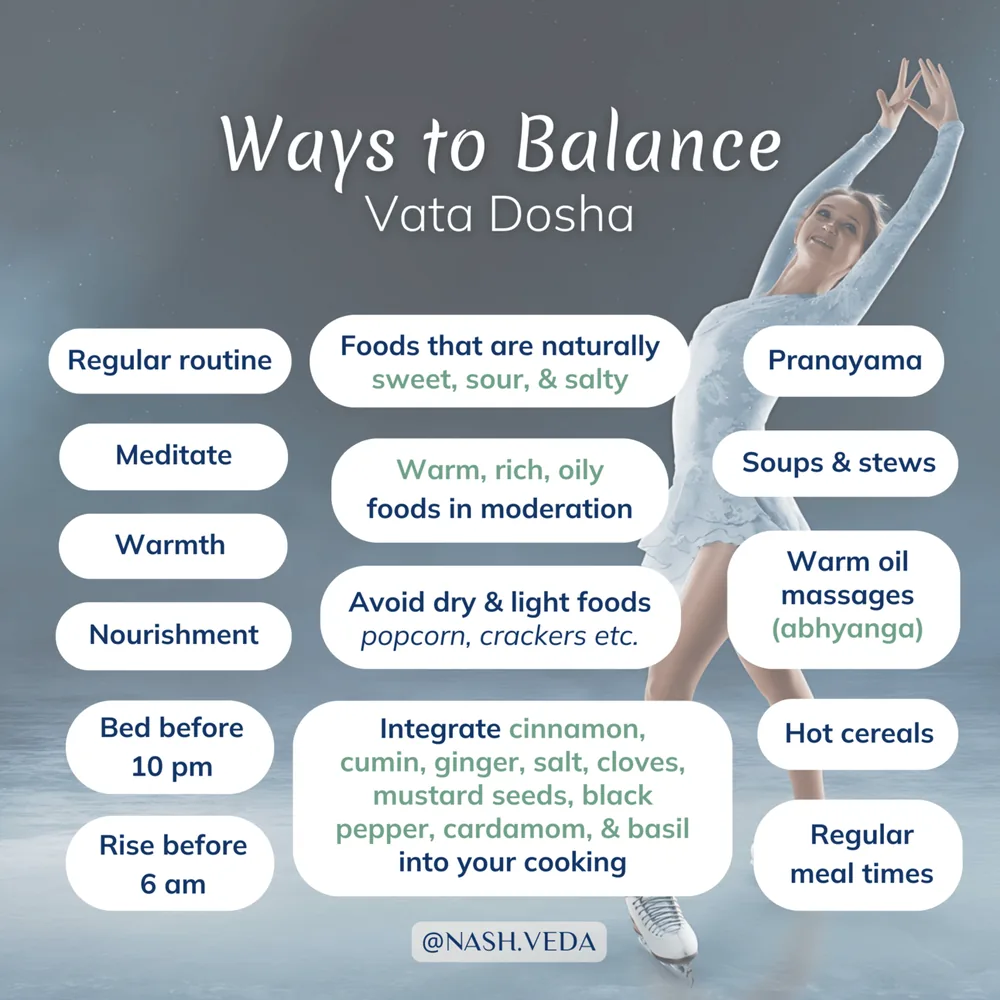
Regularly eating foods that are bitter, pungent, and astringent can further imbalance vata. Vata thrives on regularity: regular meal times, a regular daily schedule, and a regular bedtime and rising time (in bed before 10 pm and up before 6 am).
All disease begins in the gut.
Hippocrates
The Best Foods for Arthritis and Joint Mobility, According to Ayurveda
Favor foods that are well cooked, warm, and unctuous (lightly oily) to soothe vata. Soups, stews, and hot cereals are great choices. Warm, diluted, boiled milk is also a wonderful way to nourish and calm vata. Add a pinch of cardamom or dry ginger for a delicious afternoon or evening snack that also supports digestion.
Vegetables: always cooked
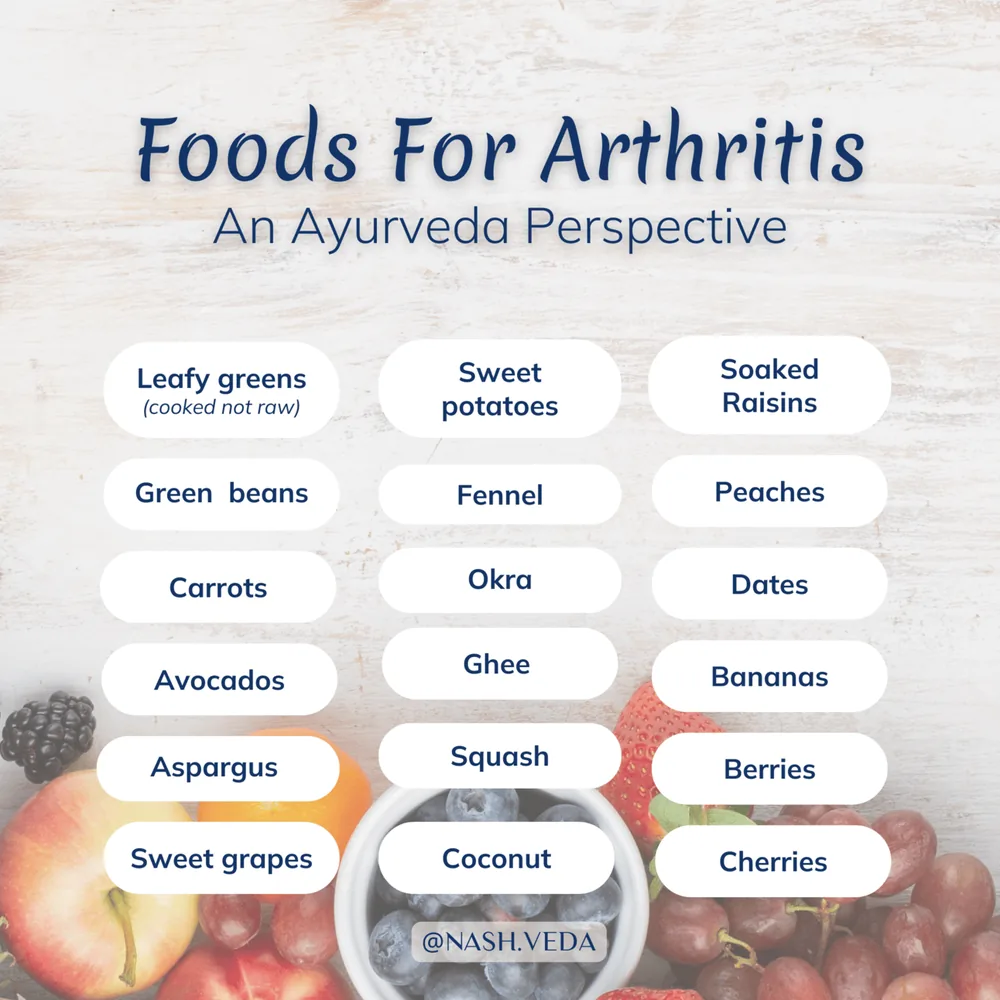
Eat vegetables cooked rather than raw, as in a salad, to avoid increasing vata further through their rough, hard nature. Favor beets, carrots, asparagus, cucumbers, fennel, green beans, leeks, okra, spinach, squash, and sweet potatoes. Peas, leafy greens, broccoli, cauliflower, celery, and zucchini are fine in moderation. It is best to cook your vegetables in ghee with digestive spices such as cumin, ginger, black pepper, mustard seeds, or hing to aid proper digestion.
Fruits: naturally sweet and sour
Fruits that help bring vata into balance have a naturally sweet or sour taste: oranges, apricots, dates, figs, bananas, avocados, grapes, cherries, peaches, melons, berries, plums, pineapple, mangos, kiwi, lemons, limes, papayas, and soaked raisins.
Spices that support digestion and your joints
In Ayurveda, balancing your digestion is a key part of restoring health. You do this with the spices below, and also by eating at regular times and chewing your food extra well so your body produces the enzymes it needs to break down what you eat.
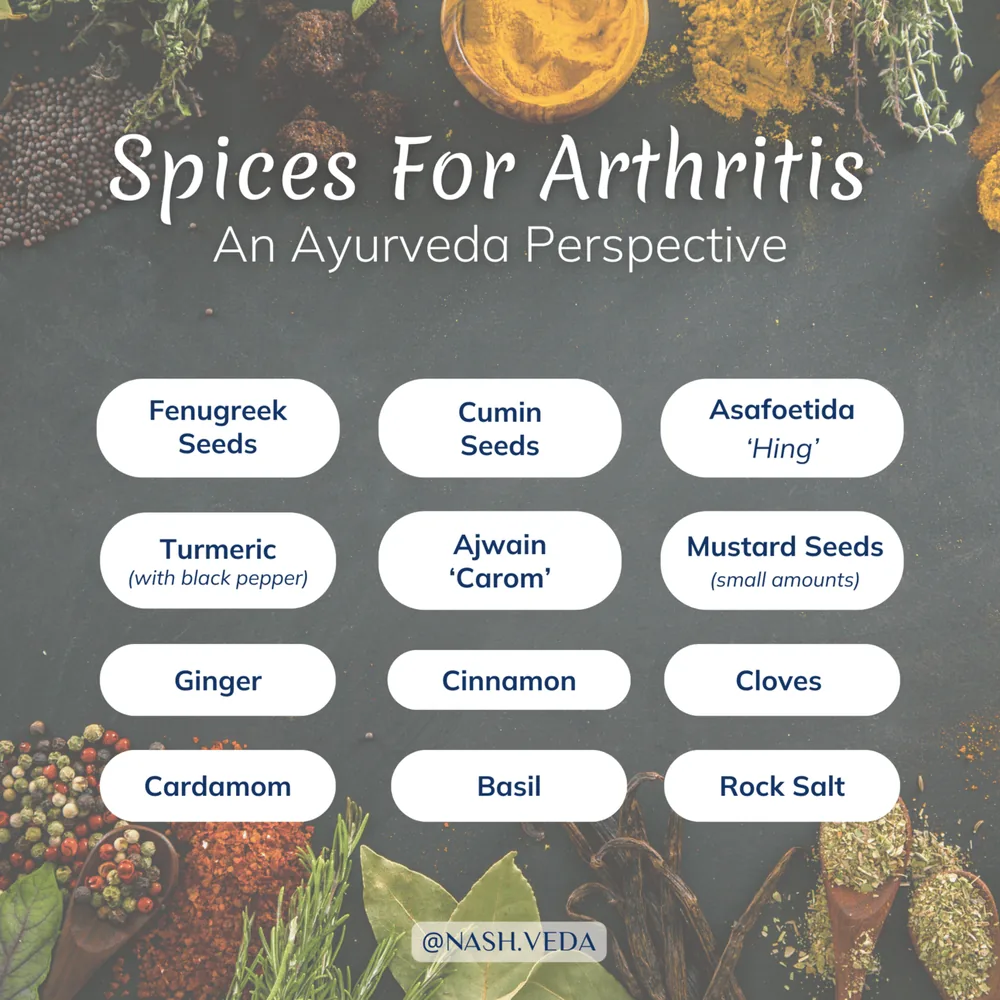
Your Ayurvedic professional can help you choose, make, and use the spice blends that best suit your digestive system. They may also recommend herbal compounds that kindle your digestive fire (agni) and improve nutrient absorption while removing ama.
You are not what you eat. You are what you digest.
Ayurvedic proverb
Herbal Oils for Joint Pain: Castor Oil and Traditional Formulas
Ayurveda typically recommends herbal oils applied directly to the joints for fast relief from the pain and discomfort of arthritis. Your Ayurvedic professional will suggest different oils and oral herbal compounds depending on your dosha imbalance and type of arthritis.
How to use castor oil with dry heat
Plain castor oil is one of the most commonly used oils in Ayurveda for rheumatoid arthritis and many other vata imbalances. It is said to balance vata while reducing pain, inflammation, and ama. After applying the oil to the affected joints, apply dry heat, such as a heating pad, to help the oil penetrate deeper into the tissues and joint. Traditionally, equal parts sand and powdered rock salt were warmed in a pan, poured into a cotton or linen bag, and applied to the joint.
Wet heat, such as a warm wet washcloth or water pack, is not recommended, as it can further aggravate the obstruction and congestion associated with RA.
Other Ayurvedic oils for joints
A few other oils my clients have had success with are NAO Ayurveda Muscle + Joint Body Oil and, if inflammation tends to be an issue, Joint Soothe II. Another traditional Ayurvedic formula often used for arthritis is Balaguluchyadi Oil (also known as Balaguluchyadi Tailam or Balaguduchyadi Taila).
Herbal oils are applied 2 to 3 times a day, or as needed. While oils can offer quick relief, they should be only one part of a holistic approach to restoring balance to the body.
Patch test any new oil on a small area of skin first. Use a heating pad on a low or medium setting, never fall asleep with it on, and check your skin often, especially if you have reduced sensation in your hands or feet. If a joint is hot, red, or swollen, talk with your practitioner or doctor before applying heat.
A Joint-Friendly Daily Rhythm for Active Seniors
Putting it all together, here is what a vata-calming day can look like. You do not need to change everything at once. Pick two or three of these and make them steady habits before adding more.
- Rise before 6 am and keep the same wake time every day, weekends included.
- Start warm. Skip iced water and reach for a hot cereal or a warm, cooked breakfast.
- Oil your joints. Massage warm oil into stiff joints (or your whole body, called abhyanga), then follow with dry heat.
- Move steadily, not strenuously. Excessive exercise aggravates vata, so favor regular, moderate movement over pushing to exhaustion.
- Eat at the same times each day, sitting down rather than on the go, and chew well.
- Cook your vegetables in ghee with cumin, ginger, black pepper, or hing.
- Dress for the weather. Keep joints covered and warm on cold, windy days.
- Calm your nervous system with meditation or gentle breathwork (pranayama).
- Wind down with warm spiced milk and be in bed before 10 pm.
Treat the Root Cause, Not Just the Symptoms
Instead of only treating symptoms, Ayurveda teaches us to address the underlying imbalances and the root cause to see lasting, profound progress. When vata comes back into balance, the benefits reach far beyond your joints.

An Ayurvedic professional can guide you to the foods, daily routine, and herbal compounds that will have the greatest impact on your unique situation.